

Choose an inflatable tent by checking usable space, weather protection, ventilation, air-beam serviceability and packed size. For wholesale and OEM orders, turn those requirements into a written specification and approve a sample before committing to production.
An attractive campsite photograph cannot show whether a mattress fits, a vent stays open in rain or a replacement air tube is available. This guide connects practical camping needs with the questions outdoor brands, distributors and retail buyers should ask before ordering.
Here, an inflatable camping tent means a tent supported by sealed, pump-inflated air beams. Event structures that need a continuously running blower require a different sourcing brief.
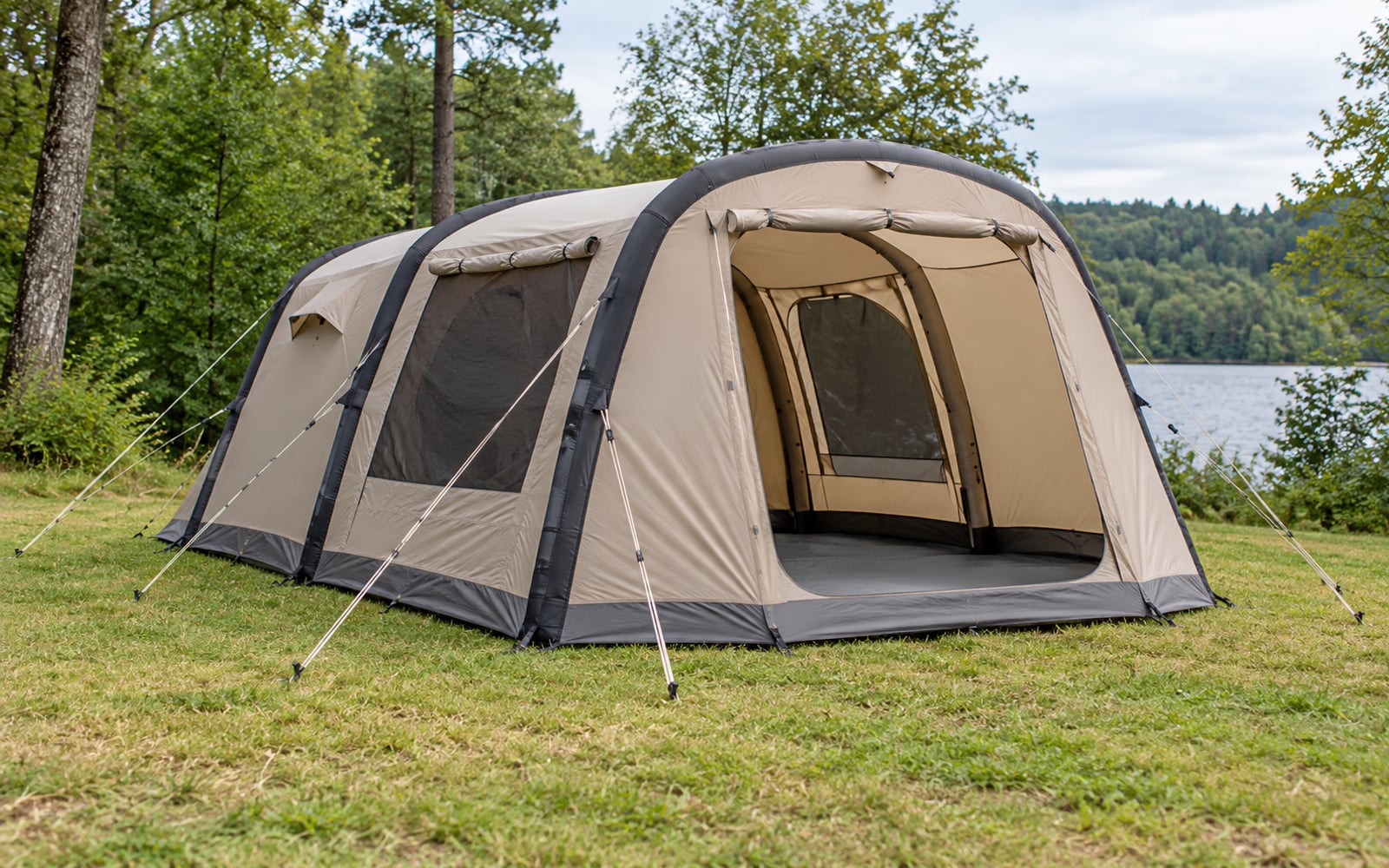
Key Features to Check Before Ordering Inflatable Tents
| Selection factor | What to verify |
|---|---|
| Usable space | Bedroom dimensions, mattress layout, headroom and storage |
| Rain protection | Fabric test scope, seams, floor and complete-tent rain testing |
| Wind suitability | Model-specific evidence, guyline layout and anchoring instructions |
| Fabric specification | Fiber composition, denier or GSM, coating and care requirements |
| Air system | Specified pressure, pump compatibility, valves and replacement parts |
| Commercial fit | Packed weight, carton size, approved sample and order terms |
Start With the Camping Experience You Want to Offer
Define the intended user before choosing a model. A family arriving by car may prioritize standing room and separate bedrooms. A rental operator may care more about cleaning access, repair procedures and spare parts. A customer walking far from the vehicle needs a different balance of carrying weight and shelter space.
For a wholesale range, write a one-sentence brief such as: “A tent for two adults on weekend car-camping trips, with space for wide sleeping mats and luggage.” Then compare candidates against that brief. Keep transport limitations, expected campsite conditions and the customer's experience level in the discussion.
Choose Tent Size From a Floor Plan
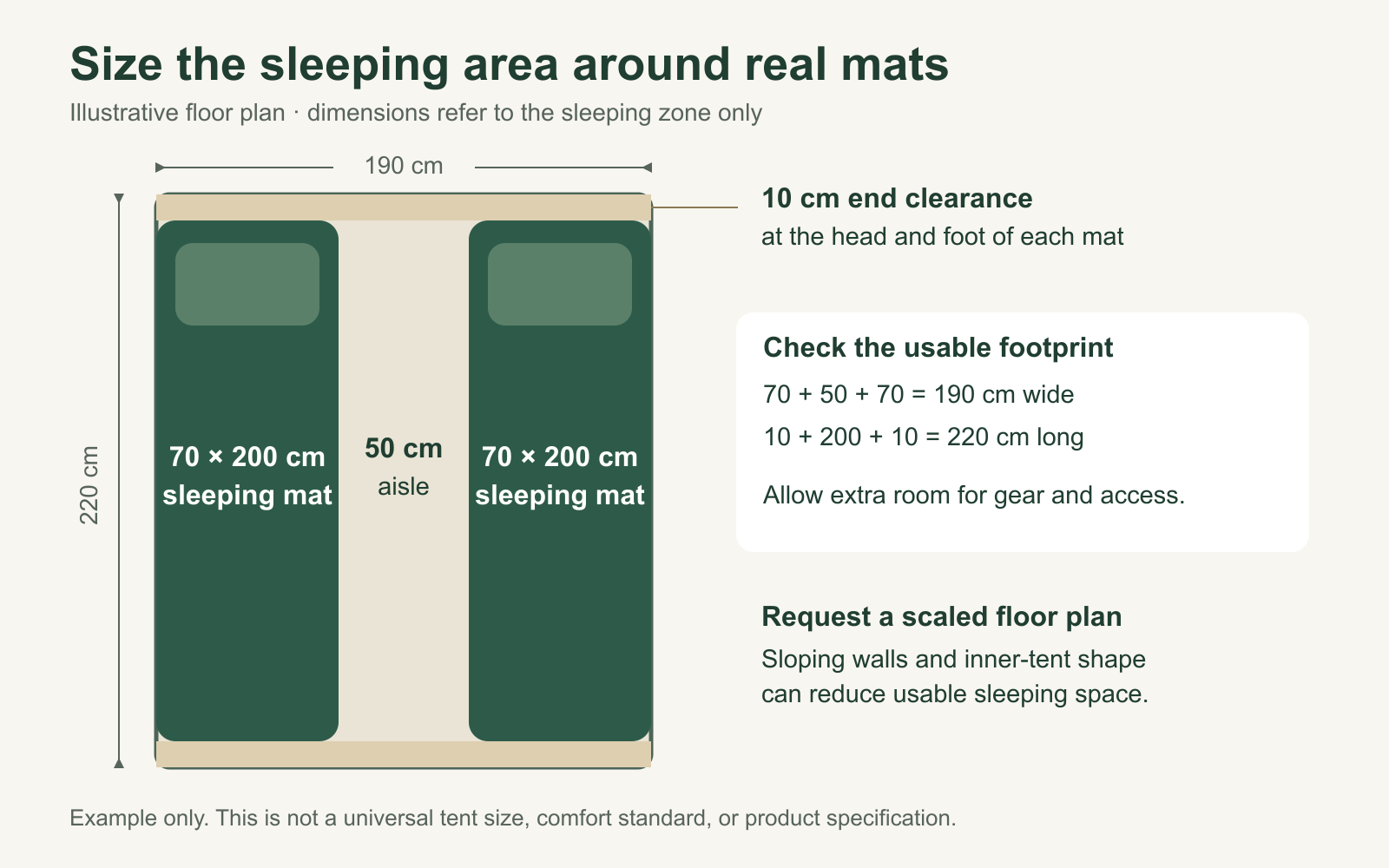
A person rating usually describes how many sleeping pads fit on the floor. It does not automatically include room for bags, pets or changing clothes. Check internal measurements and wall slope, especially if customers use tall air beds or cots. REI's tent selection guide explains this distinction.
Here is a simple planning example: two mats measuring 70 × 200 cm, with a 50 cm aisle between them, require 190 cm of width. Adding 10 cm at each end gives a 220 cm sleeping-zone length. This is an illustrative layout, not a recommended universal tent size; luggage, wall clearance and living space need additional allowance.
Ask for both the sleeping-area drawing and the full pitched footprint, including guylines. A spacious interior is only useful if the customer's campsite can accommodate the complete tent.
Understand Waterproof Ratings and Complete Tent Construction
A hydrostatic-head rating measures a fabric's resistance to water pressure. It does not describe rainfall intensity or certify the whole shelter. Ask whether a quoted number applies to the rainfly, floor or another component, and which test method was used. MSR explains fabric waterproof ratings and why a larger number alone does not settle the purchase decision.
During sample evaluation, inspect seam treatment, door openings, groundsheet joins and places where water could collect. Request complete-tent rain-test evidence where available, with the model, conditions and result clearly identified. Keep material-test results separate from assembled-product results in your own product listing.
Compare Fabric Specifications Rather Than Material Labels
Denier describes yarn linear density; GSM describes fabric weight per square meter. Neither is a complete durability score. Fiber type, weave, coating and construction also matter. Ask for a component-level material sheet and relevant test results rather than treating the largest number as the best specification. MSR's fabric guide explains why denier alone can mislead.
For polycotton, often marketed as TC fabric, confirm the actual polyester-to-cotton ratio, weight and care instructions. Outwell describes polycotton's combination of a close weave, water-repellent treatment and cotton fibers that swell when wet. That construction should not be evaluated solely by comparing coated-polyester waterproof numbers. Outwell's flysheet materials guide provides useful context.
For an OEM project, specify the body, rainfly, floor and air-beam materials separately. Agree on color references and approved material samples so a product description such as “premium fabric” becomes a specification both parties can inspect.
Check Ventilation and Explain Condensation Clearly
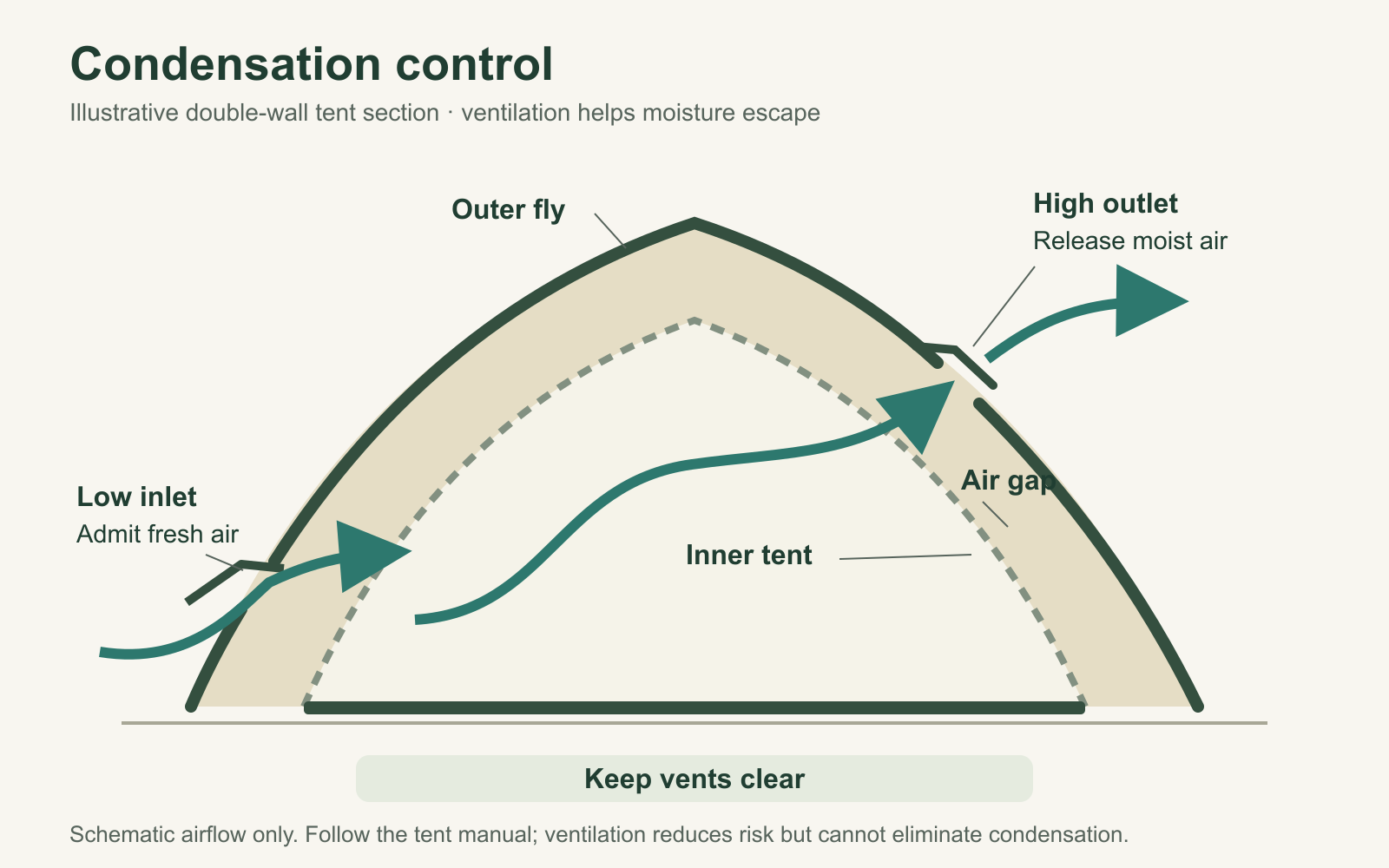
Moisture on an inner surface can come from condensation rather than rain entering through the fabric. When moist air contacts a surface below its dew point, water can condense. Breathing and wet equipment add moisture. Ventilation helps manage the problem, but no camping-tent design can promise zero condensation in every condition. REI's condensation guide explains the causes and practical responses.
Inspect low and high vents, mesh panels and ventilation options that remain usable during light rain. On a double-wall design, check whether the inner tent can maintain the intended separation from the fly. Include clear ventilation and drying instructions in the customer manual.
Evaluate Air Beams Pumps and Repair Support
Use the operating pressure in the current manual for the exact model. There is no single PSI recommendation for all inflatable tents. Air pressure changes with temperature, so a softer beam on a cold morning does not by itself establish a puncture. Outwell's air-tube guidance discusses temperature effects and repair precautions.
Before buying in bulk, confirm the pump connection, gauge, valve type and replacement-part references. Ask how a damaged tube is identified and replaced, and what the repair kit contains. Repair procedures must match the construction; an inflated air beam's protective sleeve should not be opened.
For sample testing, agree on an inflation and air-retention procedure, recording pressure, duration and ambient temperature. Photograph the valve and component labels. These records make later comparisons more useful than a general statement that the tent “holds air well.”
Check Wind Suitability and the Entire Setup Process
An inflatable frame alone does not establish wind resistance. Tent shape, anchoring and correct pitching matter. Ask for model-specific test conditions and instructions, including required guylines and pegs. Tall walls create more wind exposure, a trade-off discussed in REI's camping-tent guide.
When comparing setup claims, time the complete process: unpacking, positioning, inflation, pegging and tensioning. Also test taking the tent down and returning it to its bag. Record the number of people and the equipment used. This gives your sales team a defensible demonstration rather than an unsupported “instant setup” promise.
Measure packed dimensions and total carried weight with the pump, pegs and accessories included. For wholesale planning, obtain the export carton dimensions, gross weight and packing quantity as well.
Turn Your Shortlist Into a Wholesale and OEM Specification
Send the same sourcing brief to every shortlisted supplier so quotations cover comparable products. Include these items:
Target market, camping use case and intended season.
Usable floor plan, capacity presentation and packed dimensions.
Materials by component, colors, logo placement and accessories.
Required test documents and market-specific product information.
Sample approval criteria, inspection process and material-change approval.
Order quantity by SKU, delivery destination, trade term and requested schedule.
Written warranty terms, spare-part availability and defect-handling process.
Ask the supplier to confirm MOQ, sample cost, production lead time and customization limits in writing. Compare the total specification and support package alongside price. Keep an approved sample and signed specification as references for production inspections.
Frequently Asked Questions About Inflatable Camping Tents
Are inflatable tents waterproof?
Check the exact model's materials and construction. A fabric waterproof rating alone does not establish whole-tent rain performance; seams, doors, the floor and pitching also need evaluation.
Are inflatable tents good in wind?
Suitability depends on the specific design, test conditions, site and anchoring. Ask for evidence for the model you are buying and follow its pitching instructions.
What pressure should an inflatable tent use?
Follow the exact model's current manual and use a compatible pressure gauge. Do not transfer a PSI figure from another tent or brand.
Is TC fabric always better than polyester?
The better choice depends on the intended use, weight, care routine and complete construction. Compare actual composition and test evidence rather than choosing by the TC label alone.
Can inflatable tent air beams be repaired?
Some designs support tube repair or replacement. Confirm the model-specific procedure, compatible parts and supplier support before ordering.
What should I request before placing a wholesale order?
Request a detailed specification, sample, relevant test documents, packaging data, spare-part list and written commercial terms. Approve the sample and inspection criteria before production.
Request an Inflatable Tent Specification and OEM Quotation
Planning a wholesale range or private-label inflatable tent? Send your target market, preferred layout, expected order quantity, fabric preference, branding needs and delivery destination.
Ask for a model comparison covering usable dimensions, materials, packed size, included accessories, available test documents and sample arrangements. A clear sourcing brief helps turn initial interest into a product your customers can evaluate with confidence.
